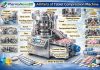





Dhaka, Bangladesh – February 2026 — Tablet manufacturing remains one of the most widely used dosage forms in the pharmaceutical industry. However, despite technological advancement in rotary compression machines and automated systems, tablet defects and processing problems continue to challenge manufacturers worldwide.
Industry experts highlight that early detection, proper in-process controls, and strict GMP adherence are essential to minimize production losses and ensure product quality, safety, and regulatory compliance.
1. Common Tablet Manufacturing Defects
Capping
Description: Partial or complete separation of the top or bottom of a tablet.
Causes:
-
Air entrapment
-
Low binder concentration
-
Excessive fines
-
High turret speed
Prevention:
-
Optimize compression force
-
Improve granule flow
-
Adjust pre-compression settings
Lamination
Description: Tablet splits into multiple layers.
Causes:
-
Over-compression
-
Air entrapment
-
Improper granulation
Control Measures:
-
Reduce compression force
-
Improve binder distribution
-
Control moisture content
Sticking
Description: Granules stick to punch faces.
Causes:
-
Excess moisture
-
Inadequate lubrication
-
Low melting point ingredients
Solution:
-
Dry granules properly
-
Increase lubricant concentration
-
Polish punch faces
Picking
Description: Small amount of material sticks to punch face, especially at embossed letters.
Causes:
-
Sticky granules
-
Poor punch design
Prevention:
-
Improve drying
-
Use anti-adherent
-
Optimize punch engraving
Weight Variation
Description: Inconsistent tablet weight.
Causes:
-
Poor flow property
-
Improper feeder speed
-
Incorrect fill cam setting
Control:
-
Monitor every 15–30 minutes
-
Adjust feed frame speed
-
Ensure blend uniformity
Cracking
Description: Fine cracks appear on tablet surface.
Causes:
-
Rapid expansion
-
Excessive compression force
Chipping
Description: Breaking at tablet edges.
Causes:
-
Low hardness
-
Improper ejection
Double Impression
Description: Duplicate embossing on tablet surface.
Cause:
-
Free rotation of punches
Solution:
-
Use anti-turning devices
-
Check punch alignment
Major Processing Problems in Tablet Manufacturing
Beyond visible defects, manufacturers often encounter broader processing challenges:
-
Poor granule flow
-
Segregation of powder blend
-
Over-lubrication
-
Inconsistent moisture content
-
Tooling wear and tear
-
Equipment vibration
-
High rejection rate
Importance of In-Process Control (IPC)
Regulatory guidelines (WHO GMP, US FDA, EU GMP, DGDA) require strict monitoring of:
-
Weight variation
-
Thickness
-
Hardness
-
Friability (NMT 1%)
-
Disintegration
-
Dissolution
-
Moisture content
Routine monitoring significantly reduces the risk of batch failure and regulatory observation.
Industry Perspective
According to pharmaceutical manufacturing specialists, over 70% of tablet defects originate from granulation and blending stages, not compression alone. Therefore, comprehensive control of upstream processes is critical.
Modern rotary tablet compression machines now include:
-
Pre-compression systems
-
Force monitoring sensors
-
Automatic weight control
-
Real-time rejection systems
Yet, human oversight and GMP compliance remain essential.
Preventive Strategy Framework
To reduce tablet defects:
-
Maintain optimal granulation parameters
-
Validate compression settings
-
Ensure tooling maintenance
-
Conduct periodic operator training
-
Follow documented SOPs
-
Implement real-time monitoring systems.