


PharmaNewsBD Feature
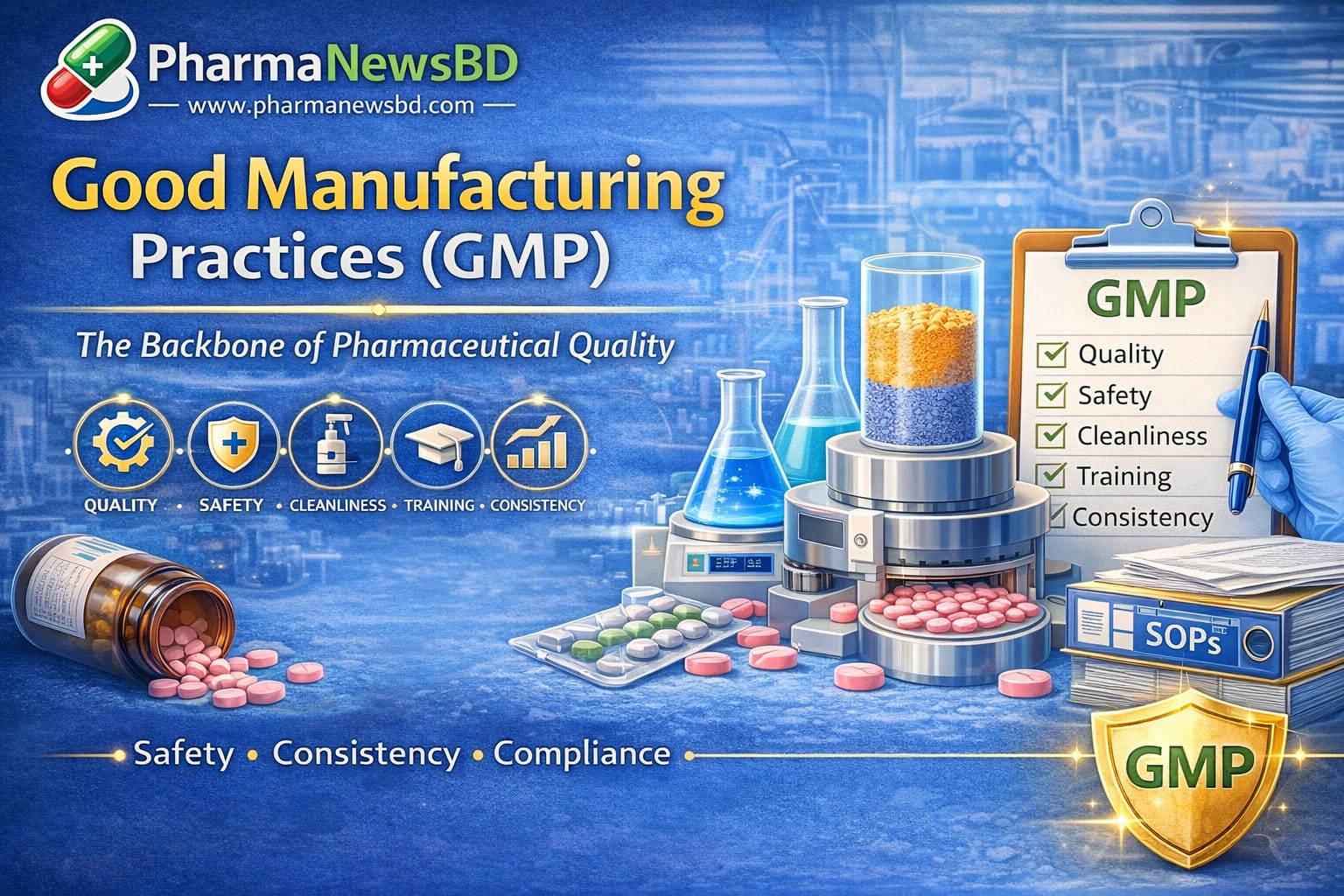
Good Manufacturing Practices (GMP): The Backbone of Pharmaceutical Quality
Dhaka, Bangladesh — In today’s highly regulated pharmaceutical environment, Good Manufacturing Practices (GMP) remain the foundation of product safety, quality, and regulatory compliance. As Bangladesh continues to expand its pharmaceutical footprint in global markets, strict adherence to GMP standards is more critical than ever.
Industry experts emphasize that GMP is not merely a regulatory requirement — it is a structured quality system that ensures medicines are consistently produced and controlled according to established quality standards.
Good Manufacturing Practices (GMP) in the pharmaceutical industry encompass a comprehensive set of principles and guidelines aimed at ensuring the quality, safety, and efficacy of pharmaceutical products.
Here are some key elements of pharmaceutical GMP:
1. Quality Management System (QMS):
* A robust QMS is the foundation of GMP, providing a framework for all quality-related activities.
* It involves establishing, implementing, and maintaining documented procedures and processes to ensure product quality.
2. Personnel:
* Qualified and trained personnel are essential for GMP compliance.
* Employees must have the necessary knowledge, skills, and experience to perform their duties effectively.
* Proper hygiene practices and personal protective equipment (PPE) are crucial to prevent contamination.
3. Premises and Facilities:
* Manufacturing facilities must be designed, constructed, and maintained to suit the specific needs of the pharmaceutical operations.
* Adequate space, appropriate utilities (e.g., water, electricity, HVAC), and controlled environments (e.g. temperature, humidity) are necessary.
* Good housekeeping practices and regular maintenance are essential to maintain a clean and hygienic environment.
4. Equipment:
* Pharmaceutical equipment must be suitable for its intended use, properly maintained, and calibrated regularly.
* Equipment must be cleaned and sanitized according to established procedures to prevent contamination.
* Validation of equipment is necessary to ensure it performs as intended.
5. Documentation and Records:
* Accurate and complete documentation is critical for GMP compliance.
* All activities related to manufacturing, testing, and quality control must be documented.
* Records must be readily available for inspection and audit.
6. Raw Materials and Packaging Materials:
* Raw materials and packaging materials must meet established specifications and quality standards.
* Suppliers must be qualified and monitored to ensure the quality of materials.
* Appropriate storage and handling procedures are necessary to maintain the integrity of materials.
7. Production and Process Control:
* Manufacturing processes must be well-defined and controlled to ensure consistent product quality.
* Standard Operating Procedures (SOPs) must be in place for all production activities.
* In-process controls are necessary to monitor critical process parameters and ensure product quality.
8. Quality Control:
* Rigorous quality control measures are essential to ensure product quality.
* Finished products must be tested and released according to established specifications.
* Out-of-specification (OOS) results must be investigated and resolved promptly.
9. Stability:
* Stability studies are conducted to evaluate the shelf life of pharmaceutical products under various storage conditions.
* Results of stability studies are used to determine appropriate expiration dates and storage conditions.
10. Complaints and Product Recalls:
* Procedures must be in place for handling customer complaints and product recalls.
* Investigations must be conducted to determine the root cause of problems and implement corrective and preventive actions.
11. Self-Inspection and Audits:
* Regular self-inspections and internal audits are conducted to assess GMP compliance.
* Corrective and preventive actions must be implemented to address any identified deficiencies.
12. Regulatory Compliance:
* Pharmaceutical manufacturers must comply with all applicable regulatory requirements, including those of the FDA, EMA, and other relevant authorities.
* Regulatory inspections are conducted to ensure compliance with GMP regulations.

By adhering to these principles, pharmaceutical manufacturers can ensure the quality, safety, and efficacy of their products, ultimately protecting public health.
Why GMP Matters
Unlike many industries, pharmaceutical quality cannot rely solely on final product testing. A tablet may pass laboratory analysis, yet still carry risks if manufacturing processes were uncontrolled.
GMP ensures:
-
Protection against contamination
-
Prevention of mix-ups
-
Accurate dosage strength
-
Traceability of every batch
-
Reliable documentation
-
Patient safety assurance
Core Components of GMP
Quality Management System (QMS)
A robust QMS integrates documentation, risk management, deviation handling, CAPA (Corrective and Preventive Actions), and continuous improvement.
Qualified Personnel
Trained operators, supervisors, and quality professionals are central to GMP compliance. Clear responsibilities and hygiene practices reduce operational risk.
Controlled Facilities & Equipment
Modern pharmaceutical plants must maintain:
-
Cleanroom environments
-
Validated HVAC systems
-
Qualified equipment (IQ, OQ, PQ)
-
Preventive maintenance programs
Documentation Discipline
GMP operates under one fundamental principle:
“If it is not documented, it did not happen.”
Batch Manufacturing Records (BMR), SOPs, logbooks, validation reports, and deviation reports form the backbone of compliance.
GMP in Tablet Manufacturing
In solid dosage production, GMP controls:
-
Granulation parameters
-
Bulk & tapped density consistency
-
Compression force monitoring
-
Weight variation
-
Hardness and friability
-
Coating uniformity
-
Cleaning validation
A failure in upstream granulation can lead to compression defects such as capping, lamination, and weight variation — highlighting the importance of process control rather than relying solely on machine adjustments.
Regulatory Landscape
Bangladesh’s Directorate General of Drug Administration (DGDA) aligns its GMP framework with international standards such as:
-
WHO GMP
-
US FDA cGMP
-
EU GMP
-
PIC/S guidelines
Global export competitiveness increasingly depends on maintaining internationally compliant GMP systems.
Modern GMP Trends
Pharmaceutical manufacturers are now focusing on:
-
Data Integrity (ALCOA+)
-
Electronic batch records
-
Risk-based quality management
-
Continuous process verification
-
Real-time monitoring systems
Digital transformation is strengthening transparency and reducing human error in GMP environments.
Consequences of Non-Compliance
Failure to comply with GMP may result in:
-
Regulatory observations
-
Warning letters
-
Export restrictions
-
Product recalls
-
Financial and reputational damage